
Footwear Insights
OEM vs ODM Shoes: Which Manufacturing Model Fits Your Brand?

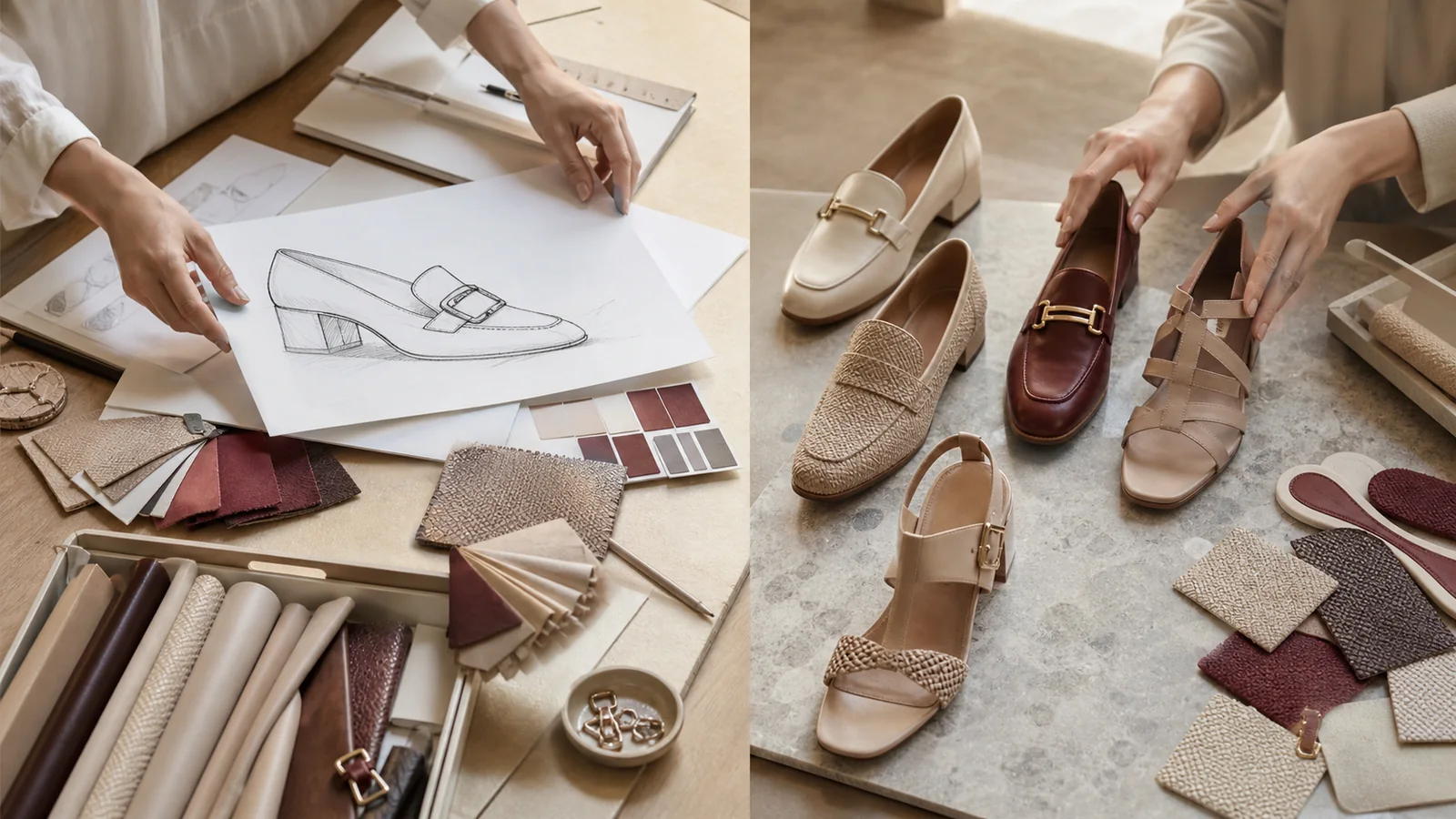
OEM shoe manufacturing builds to a buyer’s design and specification; ODM starts from a manufacturer’s existing development and adapts it for the buyer. Choose OEM when a distinctive construction is central to the product. Choose ODM when speed, lower development risk and collection testing matter more than owning every component from zero.
The choice matters in a huge, specialized supply chain. Global footwear production reached 23.9 billion pairs in 2024, according to the World Footwear Yearbook 2025. In that environment, a clear development route helps a buyer get comparable quotes and avoid paying for customization that customers may never notice.
OEM and ODM shoes at a glance
| Decision factor | OEM route | ODM route |
|---|---|---|
| Starting point | Buyer’s sketch, tech pack, sample or detailed reference | Existing last, outsole, pattern or sample direction |
| Design control | Highest | Selective customization |
| Development work | More pattern, component and testing decisions | More existing components can be reused |
| Tooling exposure | Higher when new lasts, heels, outsoles or hardware are needed | Often lower if approved components fit the brief |
| Sampling speed | Usually longer | Usually faster |
| Best fit | Signature products and established specifications | New brands, line extensions and demand testing |
These are production models, not quality grades. An ODM shoe can be carefully specified and inspected; an OEM shoe can fail if its documentation is incomplete.
When should a shoe brand choose OEM?
Choose OEM when the product’s value depends on a controlled silhouette, fit or construction. Examples include a proprietary outsole profile, a recognizable heel, an unusual upper pattern or a carefully engineered comfort system.
An OEM brief should normally define:
- Last and size range.
- Upper, lining, sock and outsole materials.
- Construction, stitching and bonding details.
- Color standards, hardware and logo application.
- Packaging, labeling and barcode requirements.
- Target-market tests and defect criteria.
The hidden cost is decision volume. A reference photo shows appearance, but it does not state material thickness, strap tension, heel attachment, outsole hardness or acceptable shade variation. Those details must become an approved sample, bill of materials and QC checklist.
For an example of how visual details become measurable production decisions, see D6’s custom high heel development page.
When should a shoe brand choose ODM?
Choose ODM when the brand wants to validate a category or launch window using a production-ready base. The buyer may retain an existing last and outsole while changing the upper material, color, padding, branding and packaging.
ODM works especially well when:
- The desired silhouette already exists in the supplier’s component library.
- Several colorways matter more than a unique mold.
- The first order is a market test.
- Delivery risk is more important than maximum novelty.
- The team has a visual direction but not a complete footwear tech pack.
ODM does not mean selecting a generic catalog shoe unchanged. A useful ODM discussion separates what can be customized immediately from what triggers new tooling, additional testing or a higher material minimum. D6’s custom slipper development example shows this component-by-component approach.
What affects MOQ more than the OEM/ODM label?
MOQ is rarely determined by one label. It is usually constrained by the least flexible input in the order.
| MOQ driver | Why it matters | Buyer response |
|---|---|---|
| Material minimum | Mills and suppliers may require a minimum color or roll quantity | Reuse one material across styles |
| Color fragmentation | Each color creates separate cutting, matching and packing work | Launch fewer colors first |
| New mold or hardware | Tooling must be recovered across a viable volume | Use an existing component for the pilot |
| Size assortment | Very shallow quantities per size complicate production | Confirm a realistic size curve |
| Custom packaging | Printed boxes and accessories have their own minimums | Start with a standard box plus branded label |
D6’s public website states that most styles start at 300–1,000 pairs, depending on material and customization. Treat that as an initial range, not a quote: the style, colors, size curve and component plan decide the final minimum.
A five-question decision test
Use OEM if you answer “yes” to most questions on the left; use ODM if the right side is stronger.
| Question | OEM signal | ODM signal |
|---|---|---|
| Must the last or outsole be unique? | Yes | No |
| Is a complete tech pack available? | Yes | No or partial |
| Is the launch date flexible? | Yes | No |
| Has demand already been validated? | Yes | Not yet |
| Can the budget absorb tooling and revisions? | Yes | Prefer to limit them |
A hybrid route is common: start with an existing last and outsole, then develop a distinctive upper, material story and brand package.
What should you send for a useful quotation?
Send a reference image or tech pack, target quantity, color count, size range, target market, required materials, logo locations, packaging needs and launch date. Also state whether the supplier may propose existing components.
This makes quotes more comparable. It also surfaces the key commercial trade-off early: which details are essential to the customer, and which can use a proven factory-ready route?
FAQ
Is private label the same as ODM?
Not exactly. Private label describes whose brand appears on the product. The underlying development can be OEM, ODM or a hybrid.
Does OEM mean the buyer owns every mold?
No. Ownership depends on the quotation and contract. Record who pays for, owns, stores, maintains and may reuse each last, outsole, heel or hardware mold.
Is ODM always faster than OEM?
Usually, but not automatically. Custom colors, scarce materials, new logos, packaging and repeated fit corrections can still extend an ODM schedule.
Can a startup use OEM?
Yes, if it has a strong specification, realistic development budget and validated demand. For many first collections, a hybrid ODM route reduces avoidable complexity.
Start with the production route, not the label
Before requesting a price, decide which design elements must be unique and which can use existing components. Then send D6 your style, quantity and launch details for a route-specific discussion.
Sources & references
- World Footwear, *The World Footwear Yearbook 2025*: https://www.worldfootwear.com/news/the-world-footwear-yearbook-2025/10794.html
- D6 Shoe Factory homepage (published categories, MOQ range and service statements): https://d6shoe.com/
- International Chamber of Commerce, *Incoterms 2020* (useful for the later contracting stage): https://iccwbo.org/business-solutions/incoterms-rules/incoterms-2020/