
Footwear Insights
Footwear Inspection Checklist: AQL, Defects and Shipment Control

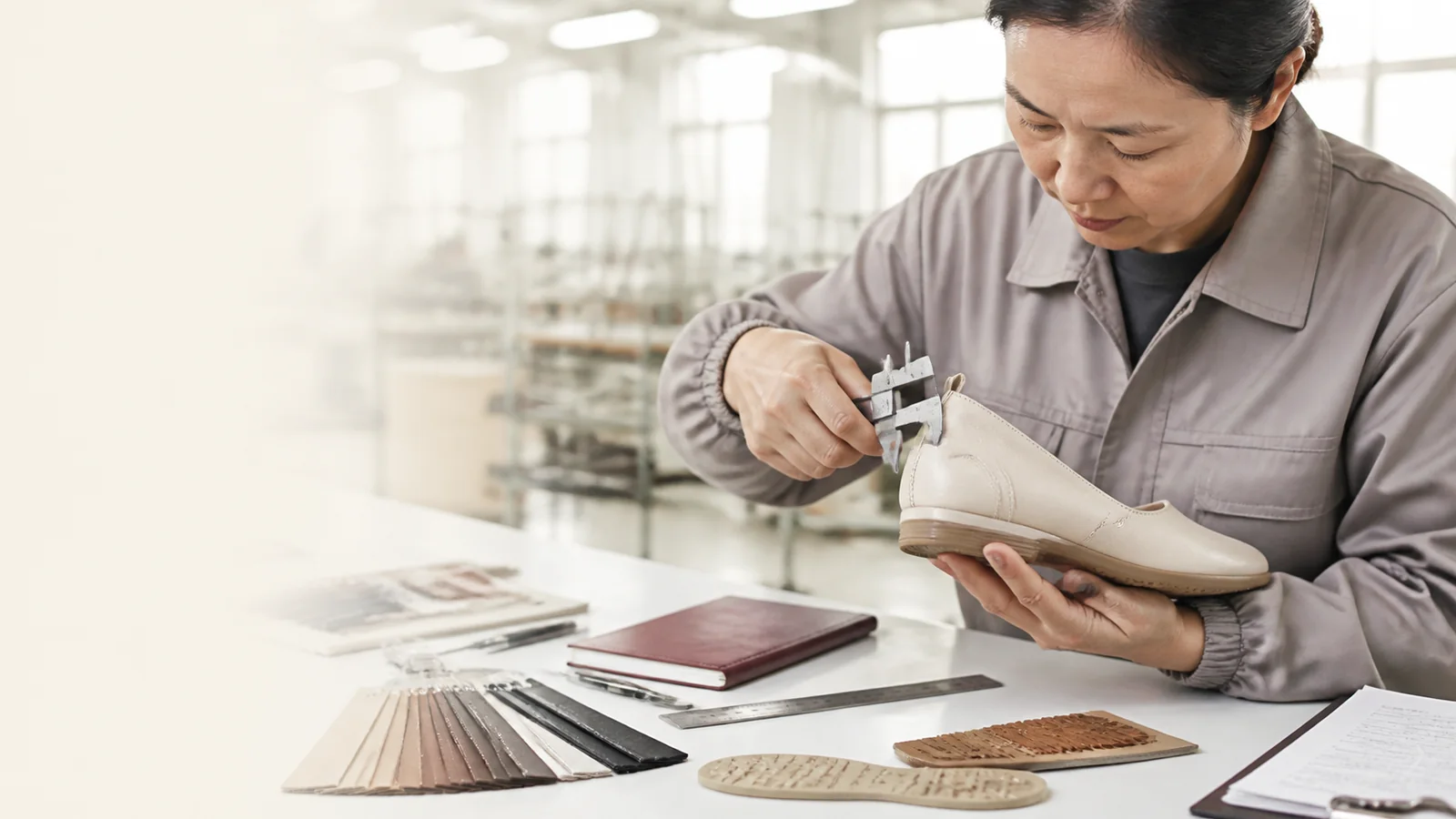
A reliable footwear inspection compares randomly selected pairs with an approved sample and written specification. It should cover quantity, size and fit, construction, appearance, performance checks, labeling and packaging. AQL determines the sampling decision; it does not replace a clear defect list or make a defective shoe “acceptable.”
What is AQL in footwear inspection?
AQL means Acceptance Quality Limit. ISO 2859-1:2026 defines AQL-indexed sampling schemes for lot-by-lot inspection by attributes. The standard uses the lot size, inspection level and selected AQL to determine the sample and acceptance/rejection thresholds.
The current ISO edition was published in January 2026 and replaced the 1999 edition. Buyers should name the agreed standard edition and sampling plan in the purchase order or inspection instruction.
AQL is often misunderstood. It is not:
- A promise that the shipment contains exactly that percentage of defects.
- Permission to ship a known safety defect.
- A substitute for material or performance testing.
- A universal number selected by the factory.
The buyer defines defect classes, AQLs and any zero-tolerance conditions based on product and market risk.
What must be approved before bulk production?
Inspection becomes subjective when the reference package is incomplete. Freeze these items before bulk cutting:
| Control document | What it should establish |
|---|---|
| Sealed approval sample | Overall construction, shape, workmanship and appearance |
| Bill of materials | Material, color, thickness/weight where relevant, supplier code and finish |
| Size specification | Key measurements, tolerances and size range |
| Color standard | Approved swatch or measurable reference |
| Logo and packaging proofs | Position, dimensions, color, barcode and carton marks |
| Defect catalogue | Critical, major and minor examples with photos where possible |
| Test plan | Required physical and chemical tests for the destination market |
For high heels, the package should also cover heel height, alignment, attachment, topline symmetry, pitch and balance. D6’s custom high heel process describes how these details move from sample review into production notes.
A practical footwear inspection checklist
1. Verify shipment identity and quantity
- Purchase order, style, color and size assortment match.
- Finished and packed quantity is sufficient for the agreed inspection stage.
- Carton count and pairs per carton are consistent.
- Random cartons and pairs are selected across the shipment, not presented by the production team.
2. Check pair matching and appearance
- Left and right shoes match in material grain, shade, shape and finish.
- Toe shape, topline, vamp and back height are symmetrical.
- Stitching is straight and secure; no skipped stitches or loose thread tails beyond the agreed limit.
- No visible glue, stains, scratches, wrinkles, dents or uncontrolled color variation.
- Hardware finish and placement match the approval sample.
3. Check dimensions and fit-related details
- Internal length, ball girth, opening, strap length and heel height meet the size specification.
- Size marking on shoe, box and carton agrees.
- Insole sits flat; no exposed fastener or hard edge can contact the foot.
- A defined size run is measured, not only the base sample size.
4. Check construction and basic function
- Flex matched pairs by the agreed method and look for opening, cracking or unusual noise.
- Check outsole bonding around toe, waist and heel.
- Pull straps, buckles, eyelets and decorations using the buyer’s specified method.
- Check zipper travel, buckle operation, hook-and-loop engagement and lace length where applicable.
- On heels, inspect alignment, stability, heel-tip seating and attachment.
These checks screen workmanship; they do not replace laboratory tests for bond strength, slip resistance, flexing, restricted substances or other market-specific requirements.
5. Check labels and packaging
- Country-of-origin and material labels match the destination-market brief.
- SKU, color, size and barcode are readable and correct.
- Tissue, inserts, silica gel policy, polybag warnings and accessories match the packing specification.
- Shoes are protected from crushing, abrasion, mold and color transfer.
- Carton dimensions, weight, marks and assortment match shipping documents.
How should footwear defects be classified?
Classification depends on intended use and the buyer’s risk assessment.
| Class | Practical definition | Possible footwear examples |
|---|---|---|
| Critical | Could create a safety or regulatory risk | Sharp exposed fastener; prohibited substance result; missing mandatory traceability information |
| Major | Likely to cause return, failure or loss of sale | Open bonding; wrong size marking; broken zipper; unstable heel; obvious pair shade mismatch |
| Minor | Does not materially affect use but falls below the agreed finish | Small removable mark; slight, inconspicuous stitch variation |
Do not copy these examples blindly. A loose decoration on adult footwear and the same part on children’s footwear may carry different risk. Record photographs and decision rules for recurring borderline cases.
When should the shipment be released?
Release only after three separate questions are answered:
- Did the sampled lot pass the agreed acceptance plan?
- Were all required laboratory reports and corrective actions accepted?
- Do quantity, packaging and shipping documents match the order?
Also state the delivery term precisely. The International Chamber of Commerce publishes 11 Incoterms 2020 rules, which allocate specified costs, risks and obligations between seller and buyer. An Incoterm does not define product quality, so the inspection and remedy clauses must remain in the contract.
FAQ
Does an AQL inspection guarantee every pair is defect-free?
No. Acceptance sampling estimates lot quality from a prescribed sample. A 100% check is different and can still be affected by inspector method and defect definitions.
Who chooses the AQL for shoes?
The buyer should select it based on product risk, retail positioning and past supplier performance, then agree it in writing. ISO 2859-1 supplies the sampling framework, not a footwear-specific universal AQL.
Is a golden sample enough for inspection?
No. Add measurable specifications, tolerances, approved materials, packaging proofs, test requirements and a defect catalogue.
When should a pre-shipment inspection happen?
It should occur at the completion level agreed with the inspection provider, when enough goods are finished and packed to draw a representative sample and verify packing. Define the threshold in advance.
Make the next inspection measurable
Send the factory a single control pack before bulk production, then use the same revision for production and inspection. To discuss the QC route for a women’s footwear project, submit the style and order details to D6.
Sources & references
- International Organization for Standardization, *ISO 2859-1:2026*: https://www.iso.org/standard/85464.html
- International Organization for Standardization, *ISO 28590:2017 introduction to the ISO 2859 series*: https://www.iso.org/standard/64622.html
- International Chamber of Commerce, *Incoterms 2020*: https://iccwbo.org/business-solutions/incoterms-rules/incoterms-2020/
- D6 Shoe Factory, *Custom High Heels Manufacturer*: https://d6shoe.com/custom-high-heels-manufacturer/